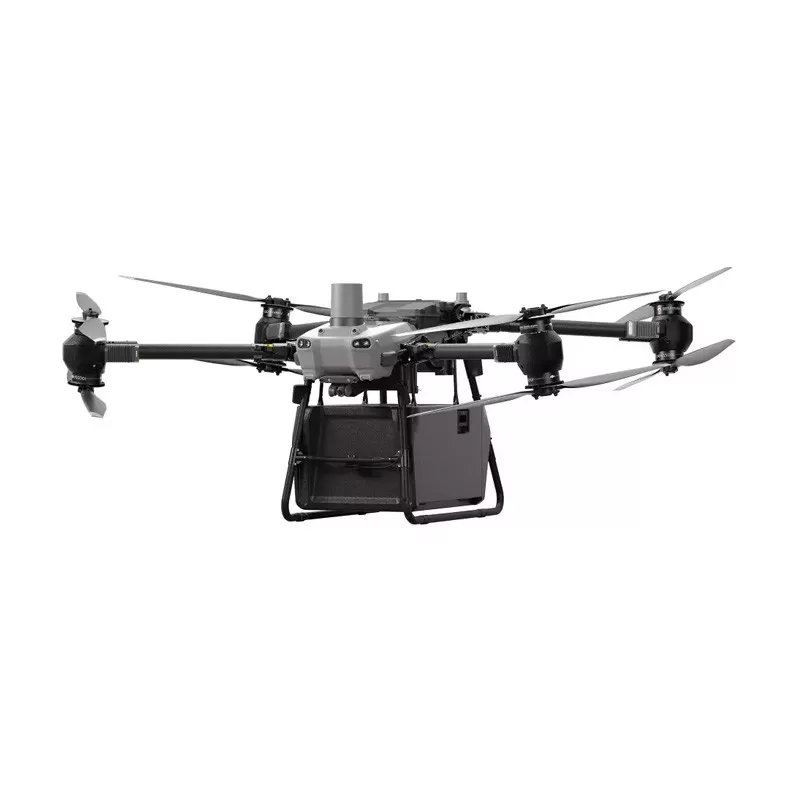
DJI Matrice 30T Drone
- Integrated Wide & Zoom cameras with a Laser Rangefinder sensor
- IP55 ingress protection, and -20° C~50° C temperature operation range
- Lightweight and portable, for those who are mobile
- Remote control is tailor-made for enterprise users
- Compatible with FlightHub 2 for efficient ground-to-cloud synergy
- 1 year auto applied care plan included
Warranty :
DJI Official 1 Year Warranty
Distributor :
DJI Authorized Dealer
Brand :

Estimated Delivery :
Delivery Will be Within 7 Days
Specifications
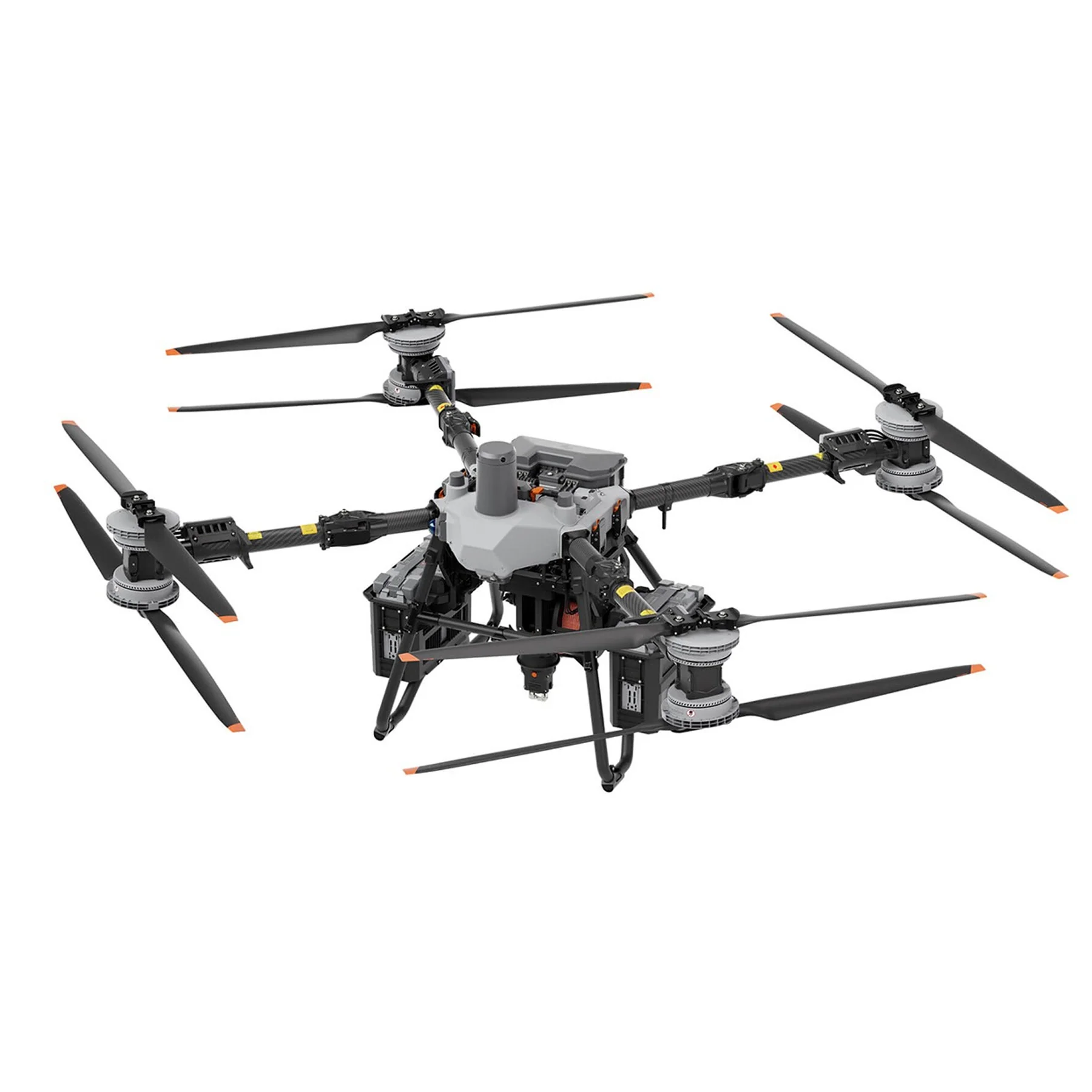
Dimensions (unfolded, excl. propellers)
470×585×215 mm (L×W×H)
Dimensions (folded)
365×215×195 mm (L×W×H)
Diagonal Wheelbase
668 mm
Weight (incl. two batteries)
3770 ± 10 g
Max Takeoff Weight
4069 g
Max Takeoff Weight for C2 Certification in EU
3998 g
Operation Frequency [1]
2.4000-2.4835 GHz; 5.725-5.850 GHz
Transmitter Power (EIRP)
2.4 GHz: <33 dBm (FCC); <20 dBm (CE/SRRC/MIC)
5.8 GHz: <33 dBm (FCC/SRRC); <14 dBm (CE)
Hovering Accuracy (windless or breezy)
Vertical: ±0.1 m (Vision System enabled); ±0.5 m (N-mode with GPS); ±0.1 m (RTK)
Horizontal: ±0.3 m (Vision System enabled); ±1.5 m (N-mode with GPS); ±0.1 m (RTK)
RTK Positioning Accuracy (fixed RTK enabled)
1 cm+1 ppm (horizontal)
1.5 cm+1 ppm (vertical)
Max Angular Velocity
Pitch: 150°/sec.; Yaw: 100°/sec.
Max Pitch Angle
35° (N-mode and Forward Vision System enabled: 25°)
Max Ascent/Descent Speed
6 m/s, 5 m/s
Max Tilt Descent Speed
7 m/s
Max Horizontal Speed
23 m/s
Max Service Ceiling Above Sea Level (without other payload)
5,000 m (with 1671 propellers)
7,000 m (with 1676 propellers)
Max Wind Resistance
12 m/s
Max Hover Time [2]
36 min
Max Flight Time [2]
41 min
Motor Model
3511
Propeller Model
1671
1676 High Altitude (not included)
Ingress Protection Rating [3]
IP55
GNSS
GPS+Galileo+BeiDou+GLONASS
(GLONASS is supported only when RTK module is enabled)
Operating Temperature
-20° to 50° C (-4° to 122° F)
Class
C2 (EU)
Angular Vibration Range
±0.01°
Controllable Range
Pan: ±90°
Tilt: -120° to +45°
Mechanical Range
Pan: ±105°
Tilt: -135° to +60°
Roll: ±45°
Sensor
1/2" CMOS, Effective pixels: 48M
Lens
Focal length: 21-75 mm (equivalent: 113-405 mm)
Aperture: f/2.8-f/4.2
Focus: 5 m to ∞
Exposure Compensation
±3 ev (using 1/3 ev as step length)
Electronic Shutter Speed
Auto Mode:
Photo: 1/8000-1/2 s
Video: 1/8000-1/30 s
M Mode:
Photo: 1/8000-8 s
Video: 1/8000 -1/30 s
ISO Range
100-25600
Max. Video Resolution
3840×2160
Max Photo Size
8000×6000
Sensor
1/2" CMOS, Effective pixels: 12M
Lens
DFOV: 84°
Focal length: 4.5 mm (equivalent: 24 mm)
Aperture: f/2.8
Focus: 1 m to ∞
Exposure Compensation
±3 ev (using 1/3 ev as step length)
Electronic Shutter Speed
Auto Mode:
Photo: 1/8000-1/2 s
Video: 1/8000-1/30 s
M Mode:
Photo: 1/8000-8 s
Video: 1/8000-1/30 s
ISO Range
100-25600
Max. Video Resolution
3840×2160
Photo Size
4000×3000
Thermal Imager
Uncooled VOx Microbolometer
Lens
DFOV: 61°
Focal length: 9.1 mm (equivalent: 40 mm)
Aperture: f/1.0
Focus: 5 m to ∞
Noise Equivalent Temperature Difference (NETD)
≤50 mK@F1.0
Infrared Temperature Measurement Accuracy [4]
±2°C or ±2% (using the larger value)
Video Resolution
Infrared Image Super-resolution Mode: 1280×1024
Normal Mode: 640×512
Photo Size
Infrared Image Super-resolution Mode: 1280×1024
Normal Mode: 640×512
Pixel Pitch
12 um
Temperature Measurement Method
Spot Meter, Area Measurement
Temperature Measurement Range
High Gain Mode: -20° to 150° C (-4° to 302° F)
Low Gain Mode: 0° to 500° C (32° to 932° F)
Temperature Alert
Supported
Palette
White Hot/Black Hot/Tint/Iron Red/Hot
Iron/Arctic/Medical/Fulgurite/Rainbow 1/Rainbow 2
Resolution
1920×1080
DFOV
161°
Frame Rate
30 fps
Wavelength
905 nm
Max Laser Power
3.5 mW
Single Pulse Width
6 ns
Measurement Accuracy
± (0.2 m + D×0.15%)
D is the distance to a vertical surface
Measuring Range
3-1,200 m (0.5×12 m vertical surface with 20% reflectivity)
Safety Regulation Level
Class 1M
Accessible Emission Limit (AEL)
304.8 nJ
Reference Aperture
18mm length, 18mm width (20.3mm diameter if equivalent to circular)
Max Laser Pulse Emission Power Within 5 Nanoseconds
60.96 W
Obstacle Sensing Range
Forward: 0.6-38 m
Upward/Downward/Backward/Sideward: 0.5-33 m
FOV
65° (H), 50° (V)
Operating Environment
Surfaces with clear patterns and adequate lighting (> 15 lux)
Obstacle Sensing Range
0.1 to 10 m
FOV
30°
Operating Environment
Large, diffuse, and reflective obstacles (reflectivity >10%)
Capacity
5880 mAh
Voltage
26.1 V
Battery Type
Li-ion 6S
Energy
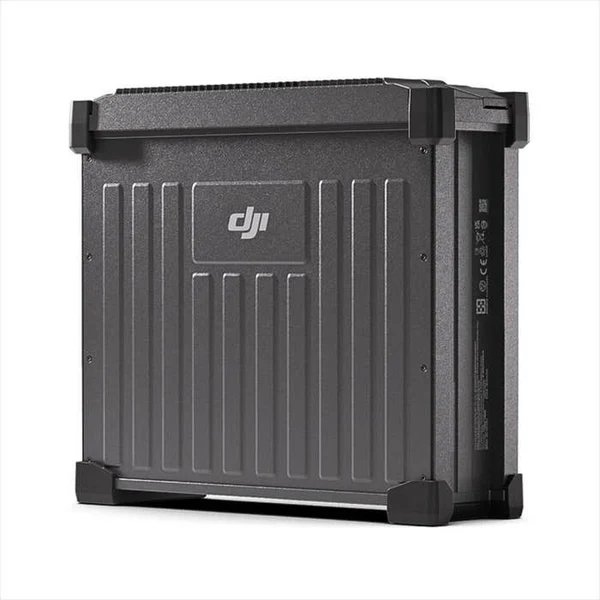
131.6 Wh
Net Weight
Approx. 685 g
Operating Temperature
-20° to 50° C (-4° to 122° F)
Storage Temperature
20° to 30° C (68° to 86° F)
Charging Temperature
-20° to 40° C (-4° to 104° F)
(When the temperature is lower than 10° C (50° F), the self-heating function will be automatically enabled. Charging in a low temperature may shorten the lifetime of the battery)
Chemical System
LiNiMnCoO2
Effective Illumination Distance
5 m
Illumination Type
60 Hz, solid glow
Screen
7.02 inch LCD touchscreen, with a resolution of 1920×1200 pixels, and high brightness of 1200 cd/m2
Internal Battery
Type: Li-ion (6500 mAh @ 7.2 V)
Charge Type: Supports battery station or USB-C charger maximum rated power 65W (max voltage of 20V)
Charge Time: 2 hours
Chemical System: LiNiCoAIO2
External Battery(WB37 Intelligent Battery)
Capacity: 4920 mAh
Voltage: 7.6 V
Battery Type: Li-ion
Energy: 37.39 Wh
Chemical System: LiCoO2
Operating Time [5]
Internal Battery: Approx. 3 hours 18 min
Internal Battery + External Battery: Approx. 6 hours
Ingress Protection Rating [3]
IP54
GNSS
GPS+Galileo+BeiDou
Operating Temperature
-20° to 50° C (-4° to 122° F)
Operating Frequency [1]
2.4000-2.4835 GHz, 5.725-5.850 GHz
Max Transmission Distance (unobstructed, free of interference)
15 km (FCC); 8 km (CE/SRRC/MIC)
Max Transmission Distance (with interference)
Strong Interference (urban landscape, limited line of sight, many competing signals): 1.5-3 km (FCC/CE/SRRC/MIC)
Medium Interference (suburban landscape, open line of sight, some competing signals): 3-9 km (FCC); 3-6 km (CE/SRRC/MIC)
Weak Interference (open landscape abundant line of sight, few competing signals): 9-15 km (FCC); 6-8 km (CE/SRRC/MIC)
Transmitter Power (EIRP)
2.4 GHz: <33 dBm (FCC); <20 dBm (CE/SRRC/MIC)
5.8 GHz: <33 dBm (FCC); <14 dBm (CE); <23 dBm (SRRC)
Protocol
Wi-Fi 6
Operating Frequency [1]
2.4000-2.4835 GHz; 5.150-5.250 GHz; 5.725-5.850 GHz
Transmitter Power (EIRP)
2.4 GHz: <26 dBm (FCC); <20 dBm (CE/ SRRC/MIC)
5.1 GHz: <26 dBm (FCC); <23 dBm (CE/ SRRC/MIC)
5.8 GHz: <26 dBm (FCC/SRRC); <14 dBm(CE)
Protocol
Bluetooth 5.1
Operating Frequency
2.4000-2.4835 GHz
Transmitter Power (EIRP)
<10 dBm
Dimensions
353×267×148 mm
Net Weight
3.95 kg
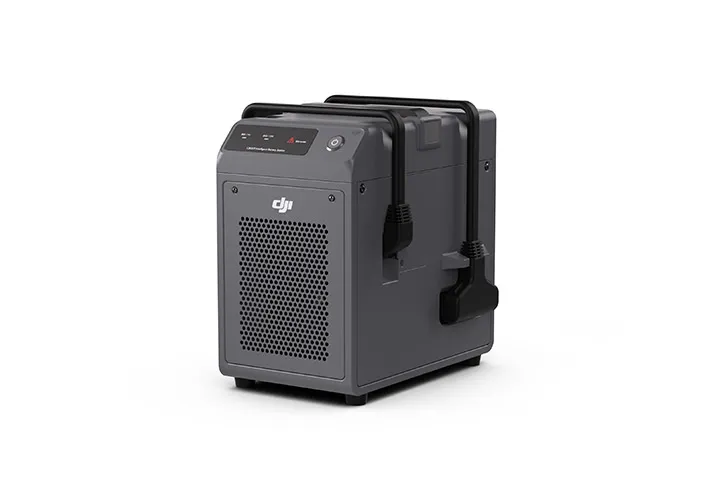
Compatible Battery Type
TB30 Intelligent Flight Battery
WB37 Intelligent Battery
Input
100-240 VAC, 50/60 Hz
Output
TB30 Battery Port: 26.1 V, 8.9 A (supported up to two outputs simultaneously)
WB37 Intelligent Battery: 8.7 V, 6 A
Output Power
525 W
USB-C port
Max. output power of 65 W
USB-A port
Max. output power of 10 W (5 V, 2 A)
Power Consumption (when not charging battery)
< 8 W
Output Power (when warming up battery)
Approx. 30 W
Operating Temperature
-20° to 40° C (-4° to 104° F)
Ingress Protection Rating [3]
IP55 (with the cover closed properly)
Charging Time [6]
Approx. 30 min (charging two TB30 batteries from 20% to 90%)
Approx. 50 min (charging two TB30 batteries from 0% to 100%)
Protection Features
Anti-Backflow Protection
Short Circuit Protection
Over Voltage Protection
Over Current Protection
Temperature Protection
Footnotes
[1] 5.8 and 5.1GHz frequencies are prohibited in some countries. In some countries, the 5.1GHz frequency is only allowed for use indoors.
[2] The maximum flight time and the hover time were tested in a lab environment and is for reference only.
[3] This protection rating is not permanent and may reduce over time after long-term use.
[4] Infrared temperature measurement accuracy was tested in a lab environment and is for reference only.
[5] The maximum operating time was tested in a lab environment and is for reference only.
[6] The charging time was tested in a lab environment at room temperature. The value provided should be used for reference only.
Guaranteed software updates until
2024/12/31
The Matrice 30 series includes two versions: M30 (its gimbal and camera have three sensors: wide-angle camera, zoom camera, laser range finder) and M30T (its gimbal and camera have four sensors: wide-angle camera, zoom camera, laser range finder, thermal imaging camera).
The DJI Dock is compatible with the M30 (Dock version) and the M30T (Dock version), but not regular M30 series drones. This is because the M30 (Dock version) has slight differences in its body to be compatible with the DJI Dock. When you purchase the DJI Dock, it includes the M30 (Dock version) or the M30T (Dock version).
Supported. M30 series aircraft comes with frame arm lock function. If the arm is not unfolded properly, the app will give a warning to prohibit takeoff.
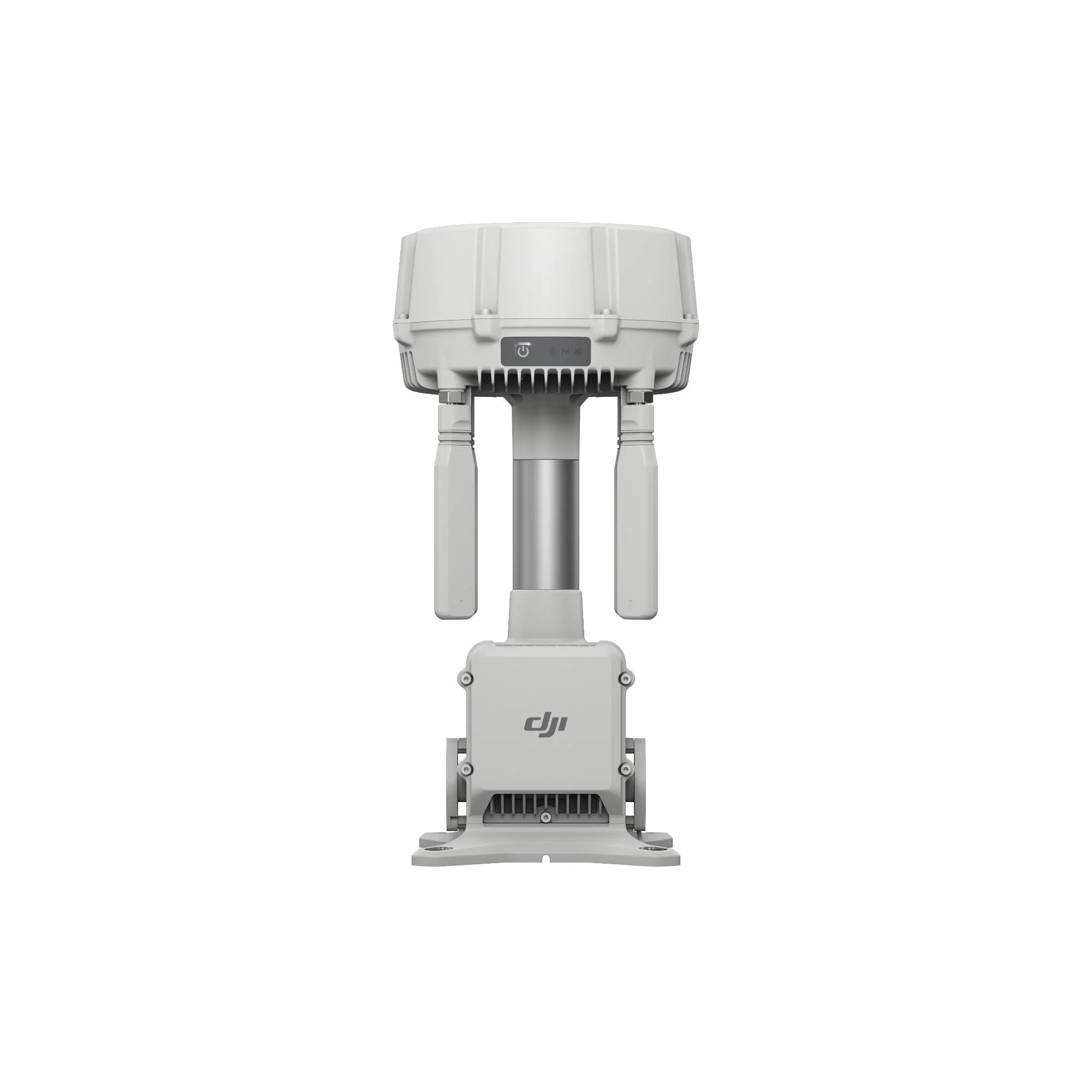
To operate a drone fitted with a DJI 4G Dongle in the UK you must:
1. Apply for an Ofcom UAS (Unmanned Aircraft Systems) Licence.
2. Seek written permission for airborne use of mobile network user equipment and use a network SIM card specifically authorised for 4G UAS operations, if directed by the network.
Further details are referenced in Ofcom licensing guidance.
Depending on the weight of your drone, you may need to register as an operator and obtain an operator ID from the CAA. To apply for an operator ID, visit the CAA website: Registering a drone or model aircraft | UK Civil Aviation Authority.
1. Apply for an Ofcom UAS (Unmanned Aircraft Systems) Licence.
2. Seek written permission for airborne use of mobile network user equipment and use a network SIM card specifically authorised for 4G UAS operations, if directed by the network.
Further details are referenced in Ofcom licensing guidance.
Depending on the weight of your drone, you may need to register as an operator and obtain an operator ID from the CAA. To apply for an operator ID, visit the CAA website: Registering a drone or model aircraft | UK Civil Aviation Authority.
For the Ofcom UAS Licence, visit the Ofcom website.
Ensure you meet all requirements and guidelines provided by these authorities.
Ensure you meet all requirements and guidelines provided by these authorities.
No, a standard network SIM is not compliant with the legal requirements for operating the 4G Dongle in the UK. You must obtain a dedicated SIM authorised for UAS operations through your network provider.
With a BS30 Intelligent Battery Station, it takes about 50 minutes to fully charge the two TB30 Intelligent Flight Batteries, about 40 minutes to charge up to 90%, and only about 30 minutes to charge up from 20% to 90%.
TB30 Intelligent Flight Batteries can work in operating environments with temperatures ranging from -20°C (-4°F) to 50°C (122°F). Battery life will be shortened when used in low temperature environments. Please plan your flight times accordingly. For optimal battery performance, it’s recommended to keep the battery temperature above 18°C (64°F), or heat the battery to 18°C (64°F) with its self-heating function (a takeoff limit will be triggered if the battery temperature is below 10°C (50°F)).
TB30 Intelligent Flight Battery’s power level is 131.6 watt hours. Please comply with local airline regulations when planning to fly with batteries.
Long-term storage of a lithium battery at full charge will significantly shorten its battery life. In order to ensure safe storage and extend the battery life, a fully charged battery will activate its auto-discharging function to discharge itself to a level of about 60%. During the auto-discharging process, it will release some heat, which is normal.
Not supported.
It will be supported in the future.
Gimbal and camera are fixed cannot be replaced.
Single Shot, High-res Grid Photo, Timed Shot, Panorama, and Smart Low-light Photo
Flip the gimbal up by 90° to lock its tilt.
Lock the tilt to better protect the camera lens and prevent scratches during transportation or storage of the aircraft. The gimbal can be quickly and easily unlocked when arriving at the operation site, greatly reducing preparation time for the operation.
Lock the tilt to better protect the camera lens and prevent scratches during transportation or storage of the aircraft. The gimbal can be quickly and easily unlocked when arriving at the operation site, greatly reducing preparation time for the operation.
Supports Payload SDK and Mobile SDK. The Payload SDK interface on top of M30 series aircraft integrates the functions of Onboard SDK.
Please contact dev@dji.com for further technical support.
Please contact dev@dji.com for further technical support.
Not supported. TheM30 series is not designed for aerial surveying. Users can plan a flight path and capture photos in the aerial FPV mode of DJI Pilot 2 App, but the model's accuracy is not guaranteed.
Yes. Upgrade the firmware of D-RTK 2 Mobile Station to the latest version to use with the M30 series.
1. Connect the aircraft to a computer and update the firmware of the aircraft, remote controller (RC), and D-RTK 2 Mobile Station by using DJI Assistant 2 For Enterprise.
Use DJI Pilot 2 App to update the firmware of the aircraft, remote controller (RC), and BS30 Intelligent Battery Station.
Download the firmware on DJI website(hyperlink), and insert the SD card with the firmware package into the aircraft for offline update.
See the User Manual for more information.
Use DJI Pilot 2 App to update the firmware of the aircraft, remote controller (RC), and BS30 Intelligent Battery Station.
Download the firmware on DJI website(hyperlink), and insert the SD card with the firmware package into the aircraft for offline update.
See the User Manual for more information.
Supported.
DJI Pilot 2 (For Android) and other software developed by using MSDK.
The M30 series includes two versions: the Chinese version and the International version. Please check with the local aftersales service center and the dealers about the availablity of the product.
There is no plan to launch an official backpack.
Related Products